Studio Notes July -Defence Force Collars & Mozzie Nets
Materials Carry Their Own Stories
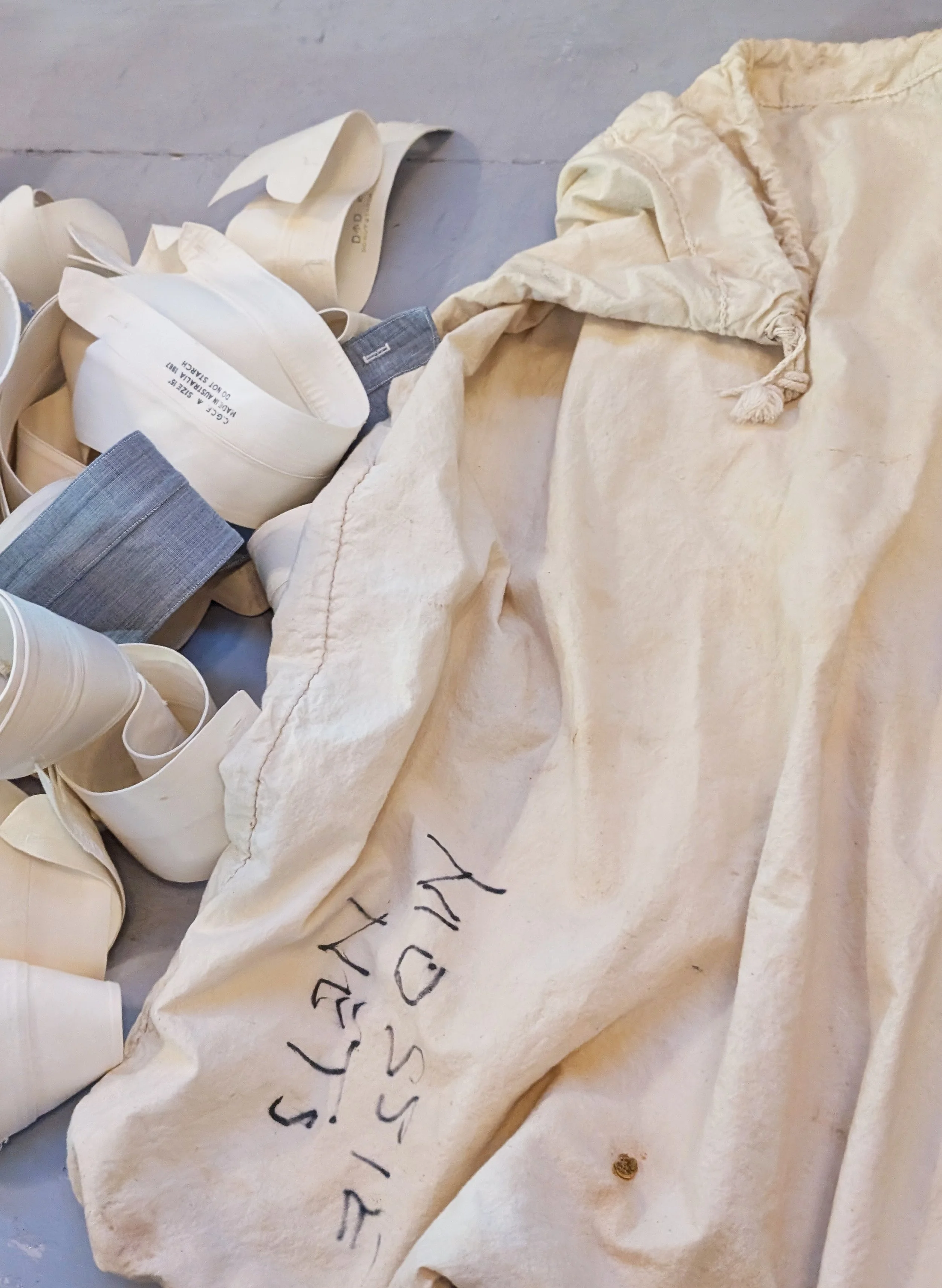
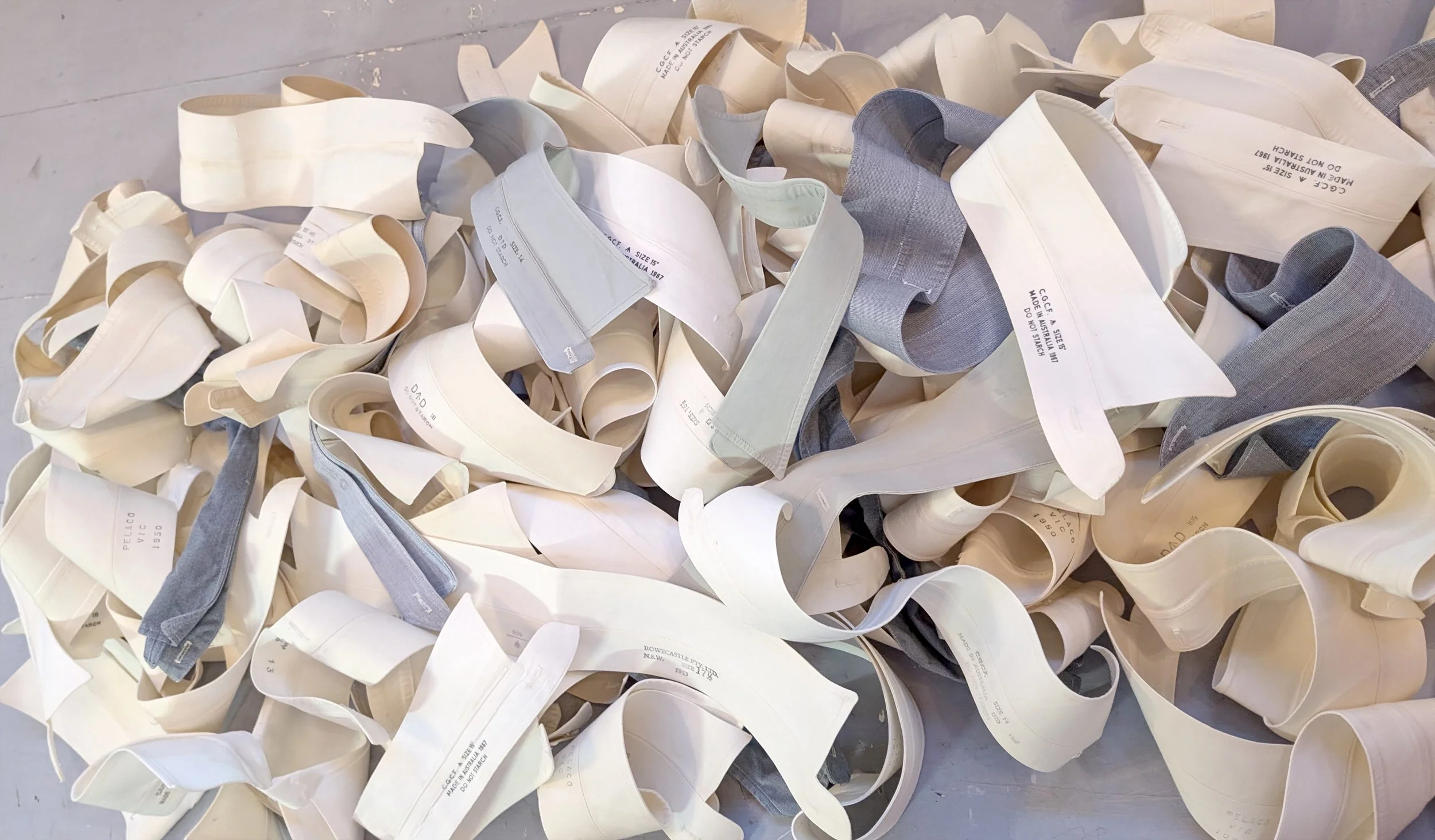
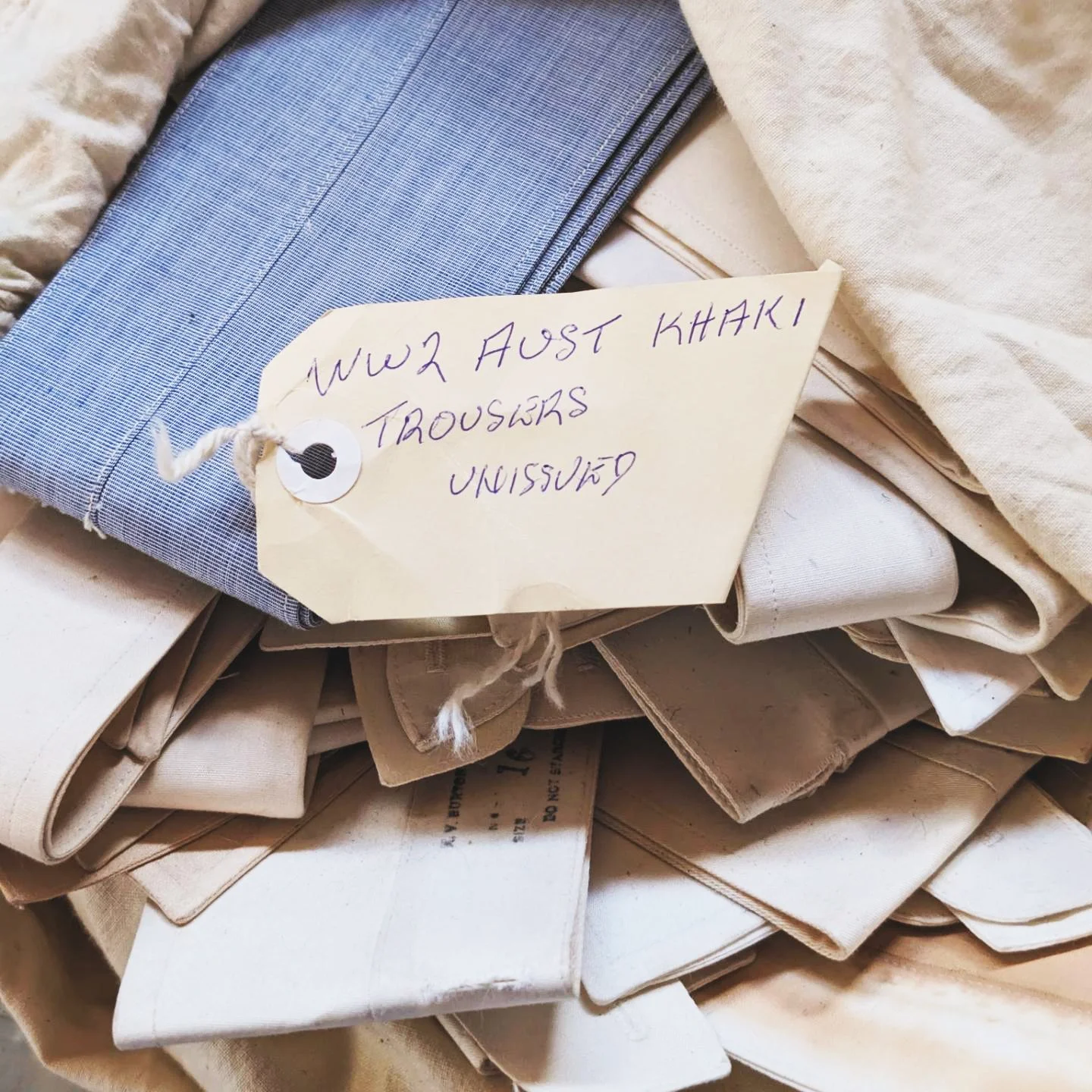
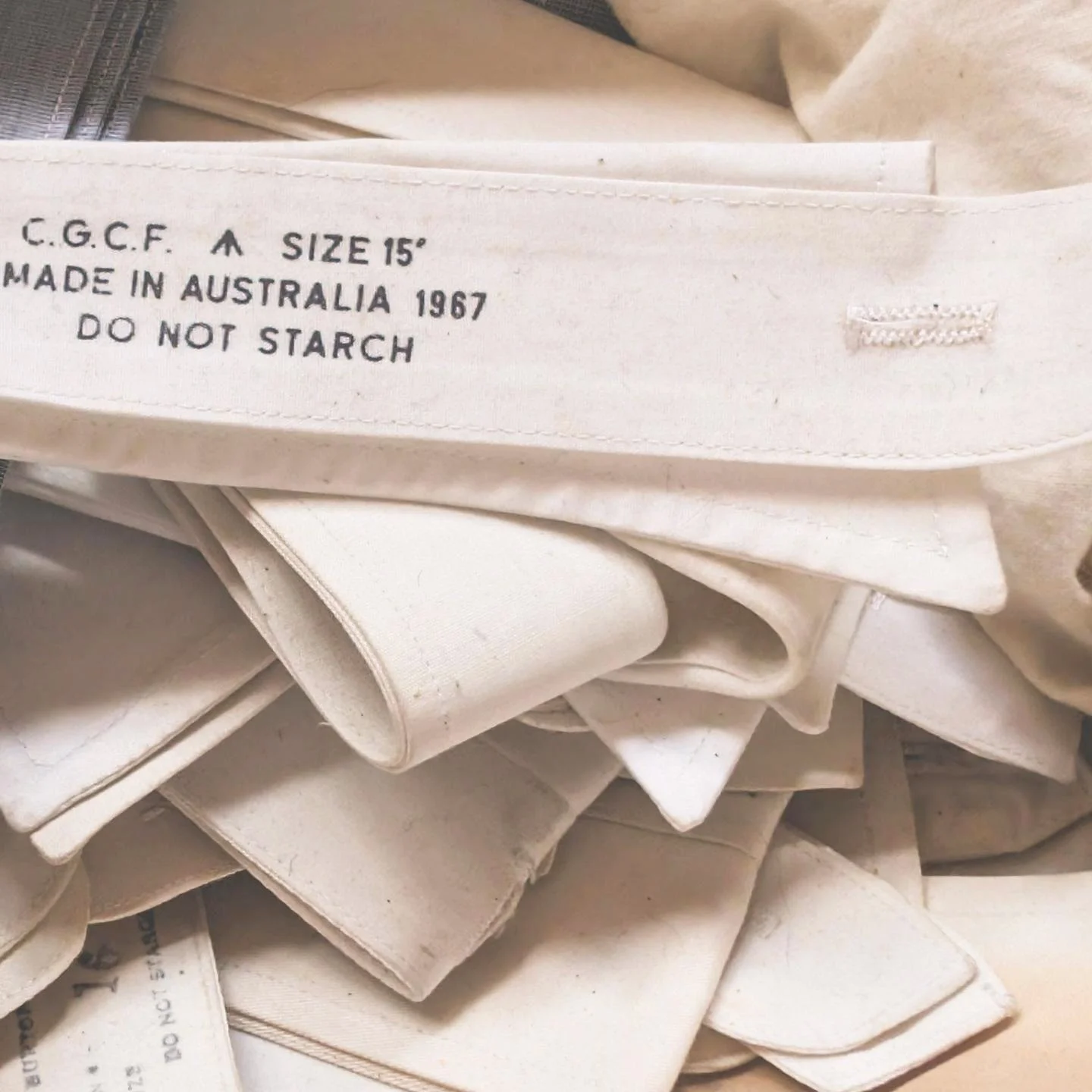
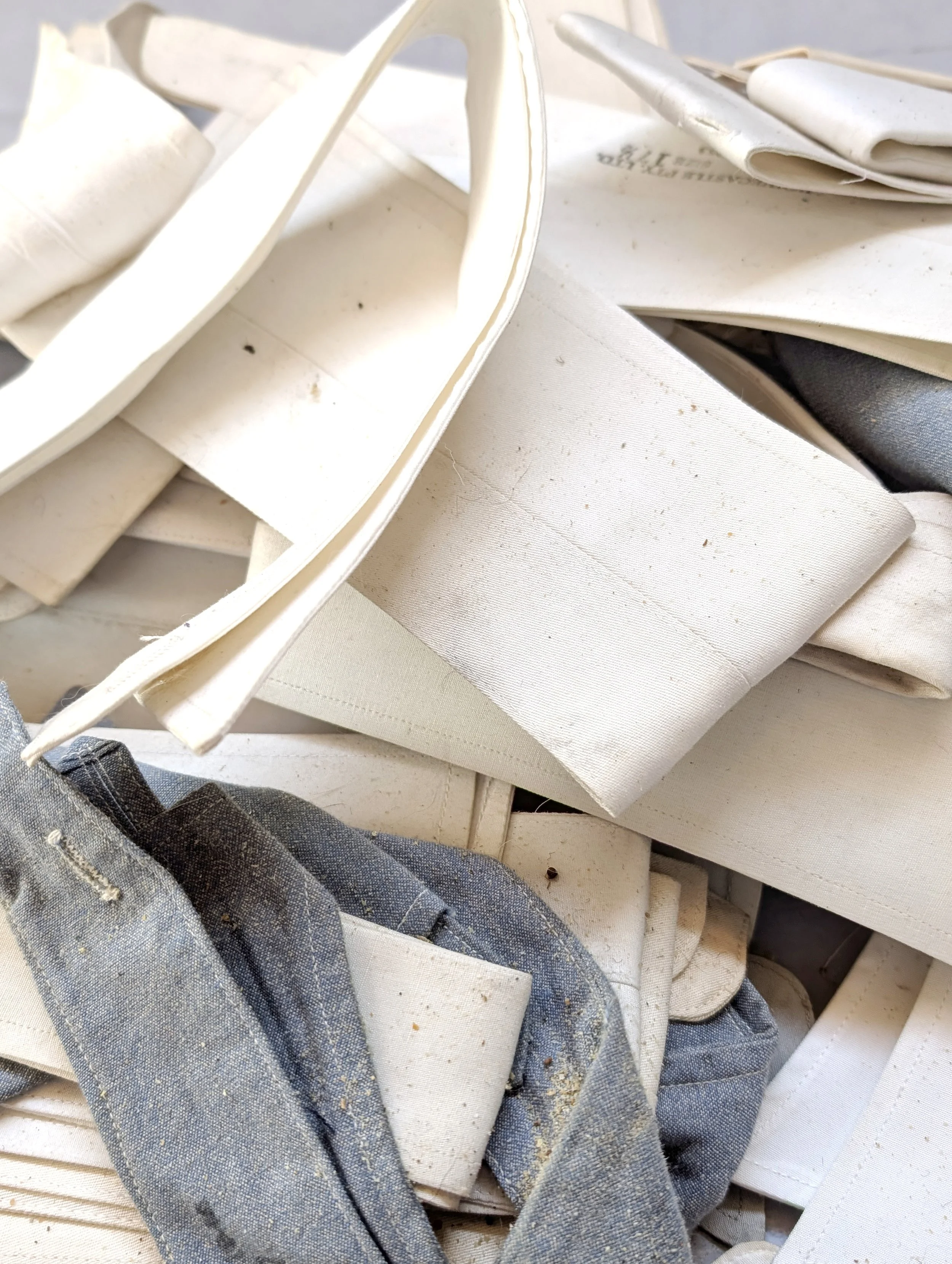
Recently I acquired a large bag of vintage detachable defence force collars dating from around the WW11 through to the late 1960s, suggesting links to Vietnam and Korean wars as well. At first glance they're quiet, ordinary objects, but the more time I spend with them, the more they reveal.
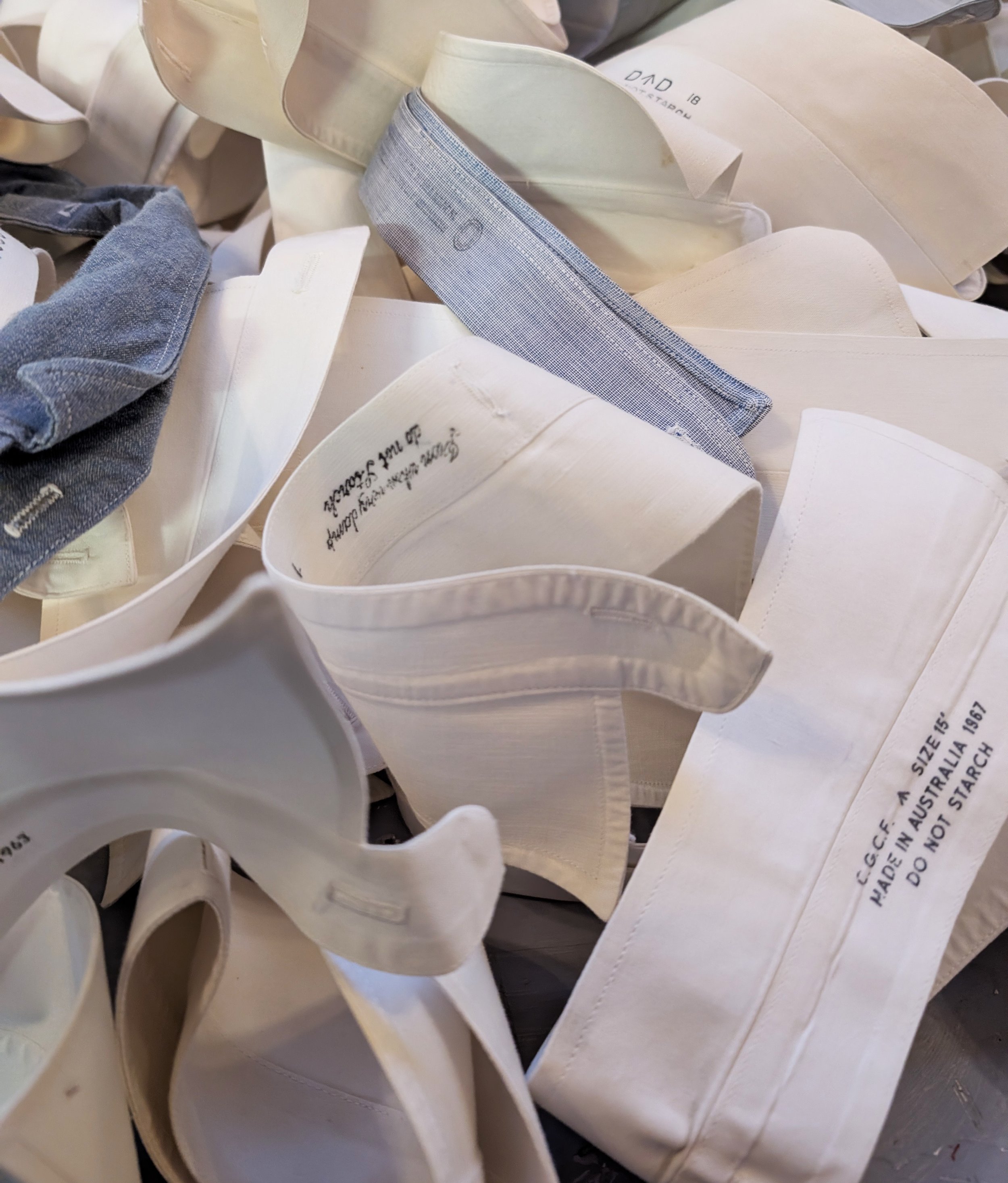
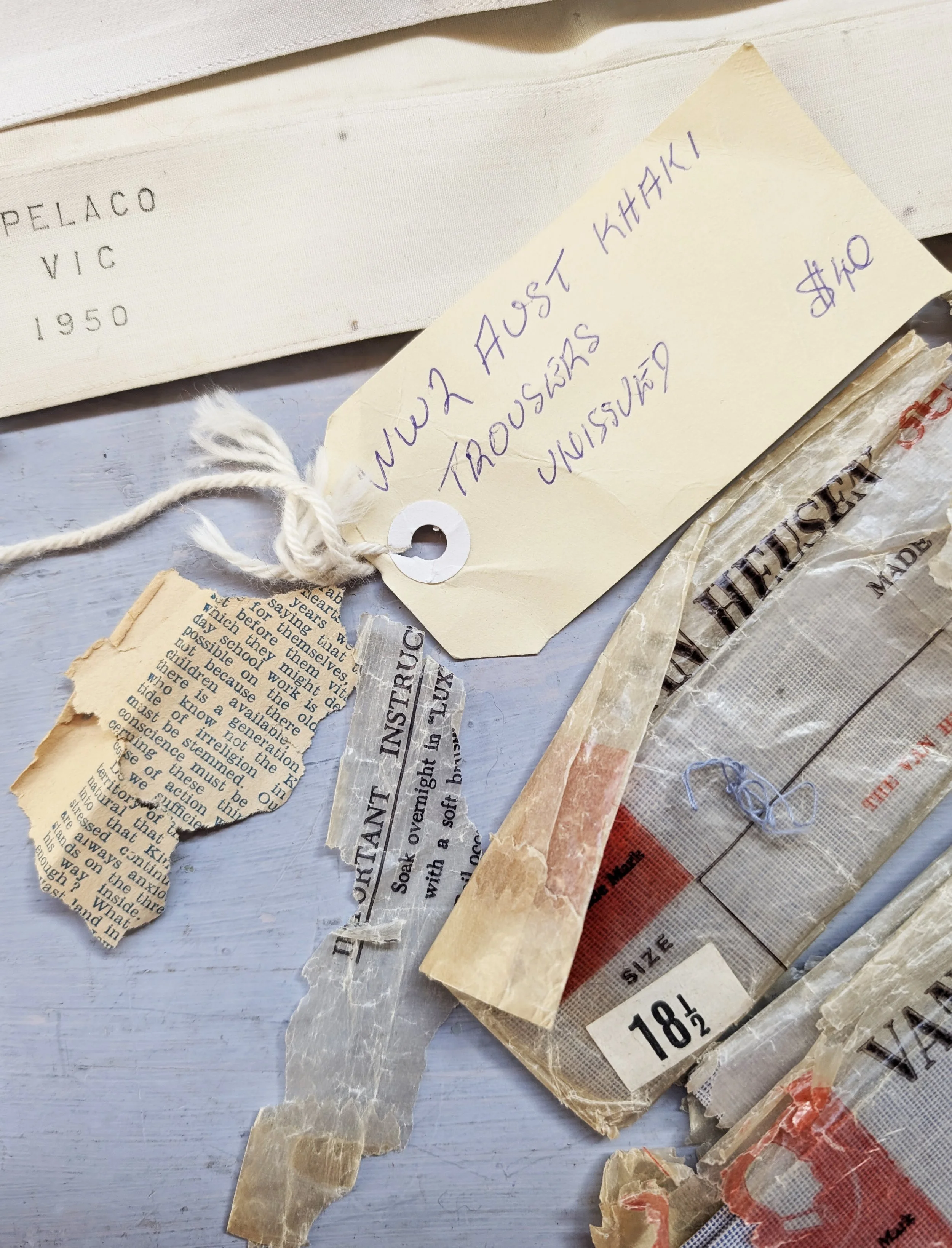
Most of the collars appear to have been issued for military use ,some RAF and Army, some with handwritten names marked inside. Others seem never to have been worn at all. Together they form a small archive of everyday objects that have somehow survived for decades, stored away in a military style cotton bag and largely forgotten.
History of Collars
Detachable collars were once a practical part of military and civilian clothing. Rather than replacing or constantly washing an entire shirt, the collar could simply be removed, cleaned or exchanged. In Australia during the war and post-war years, this was still a common feature of some military uniforms and workwear, reflecting a time when clothing was made to last and nothing was wasted.
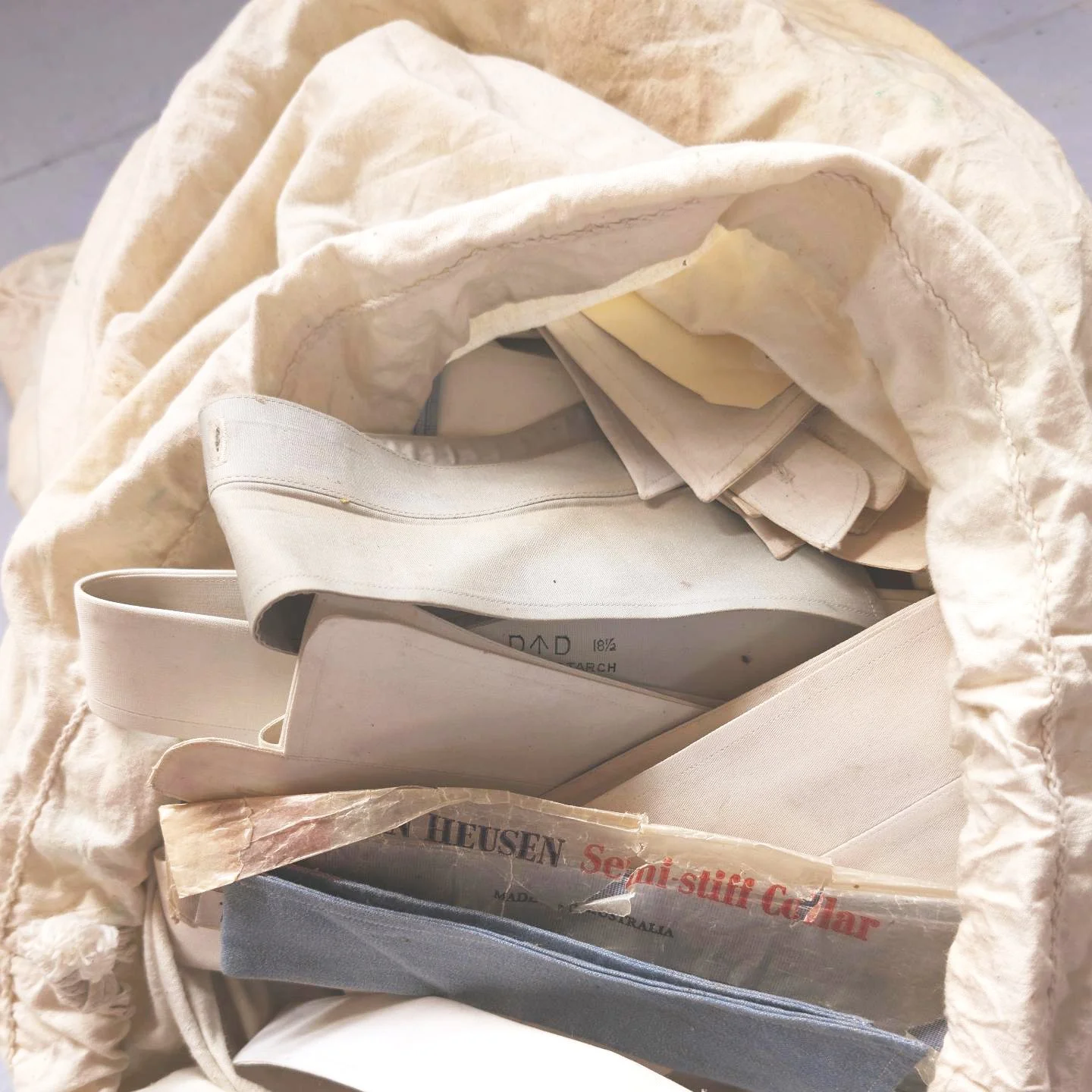
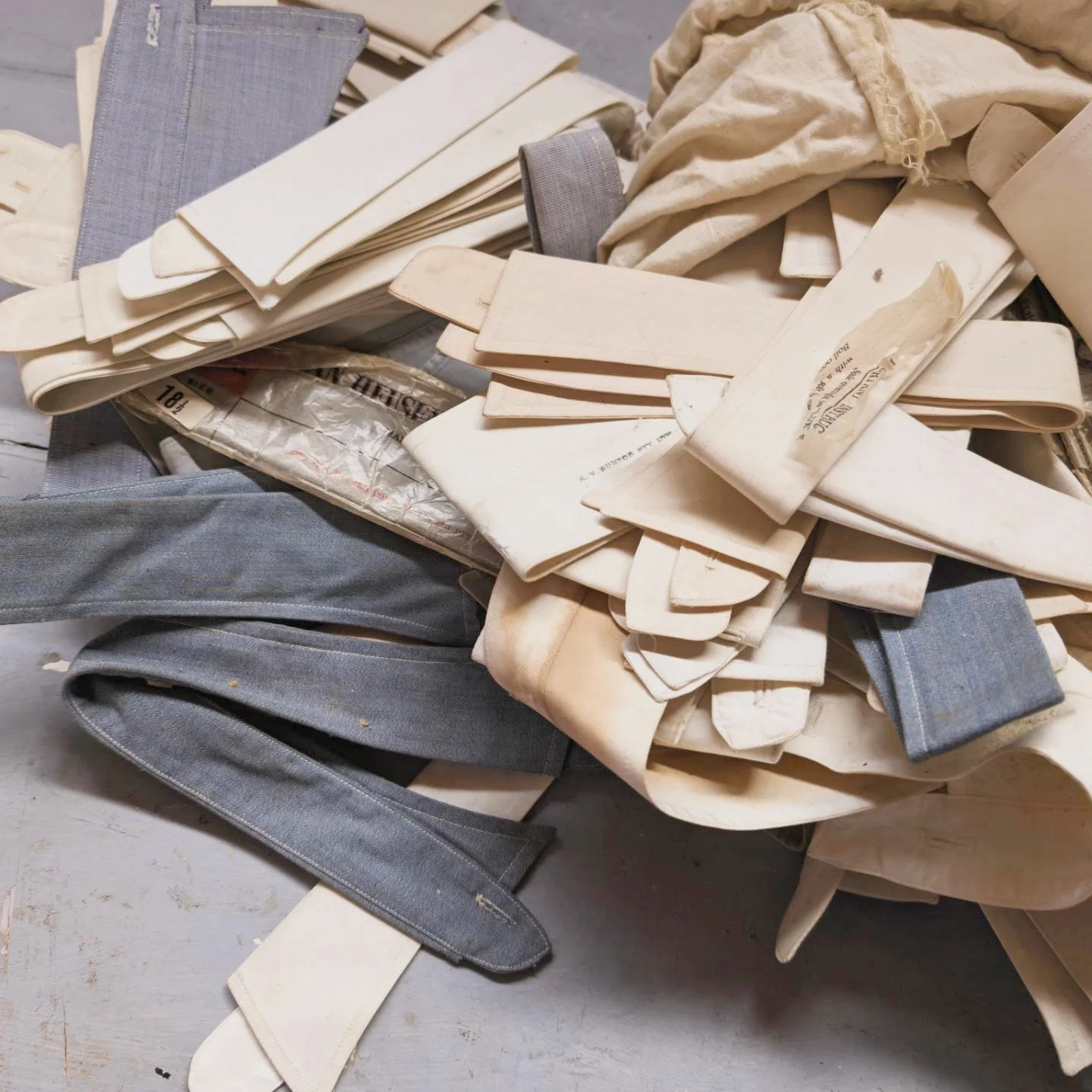
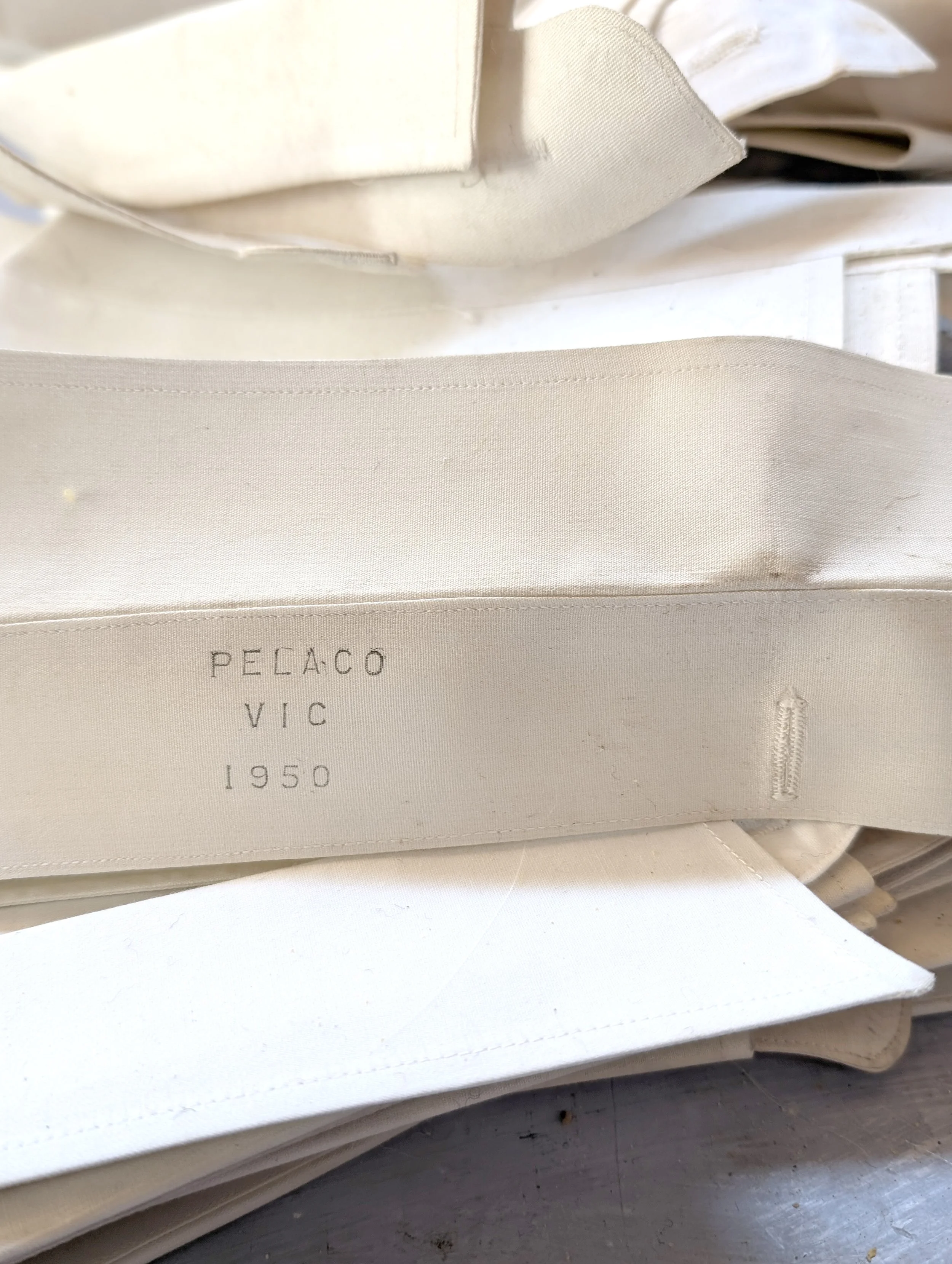
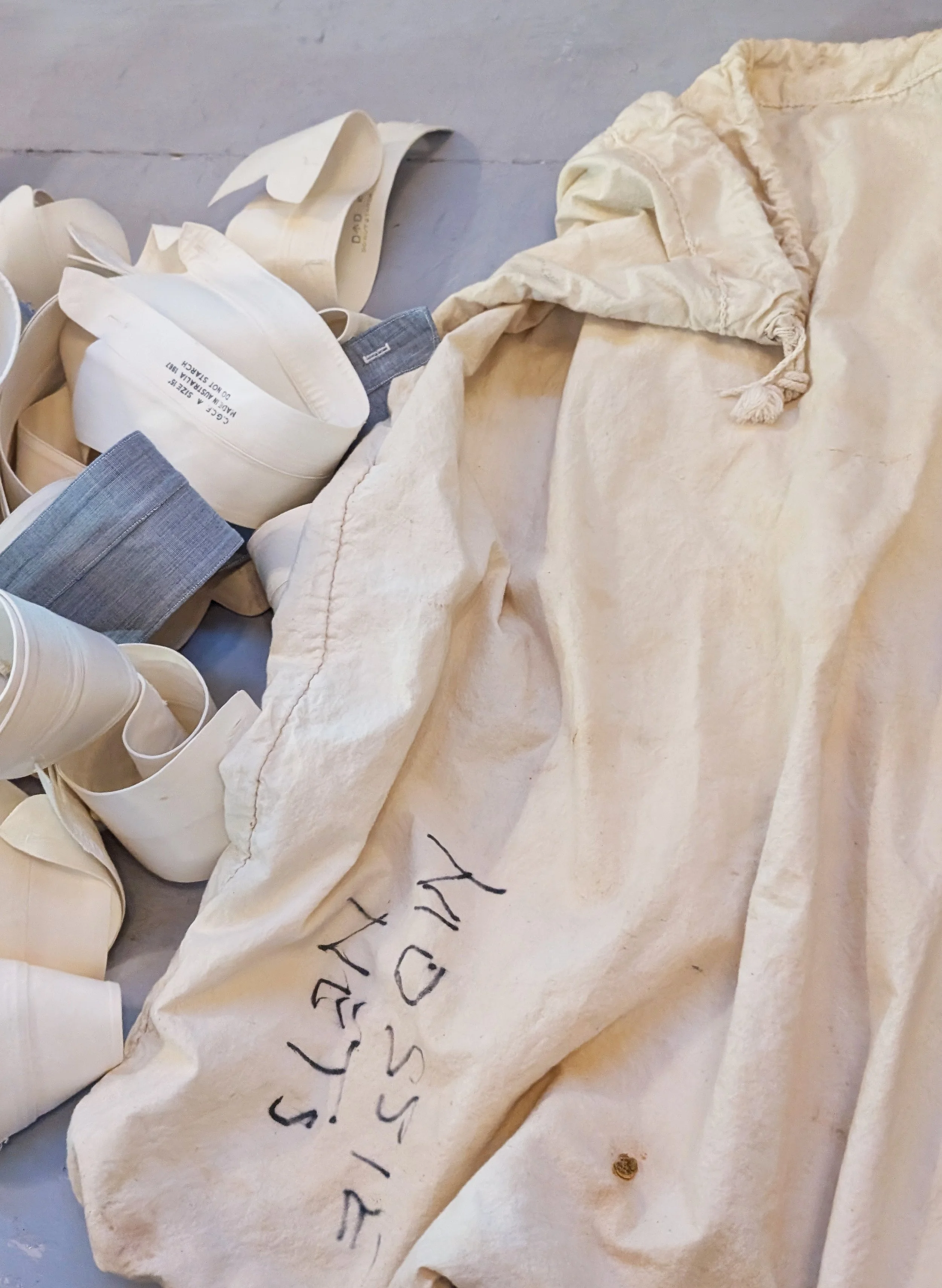
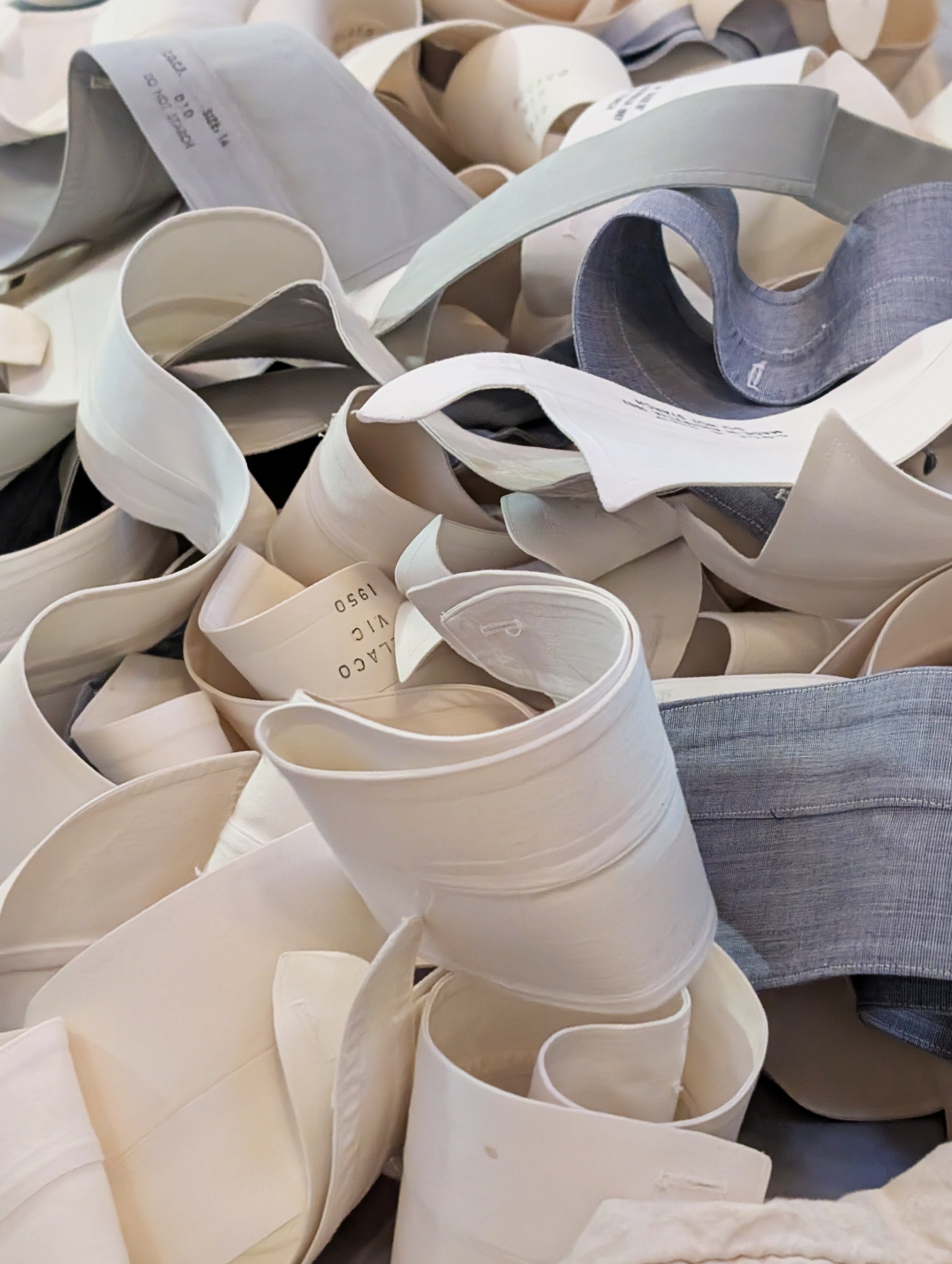
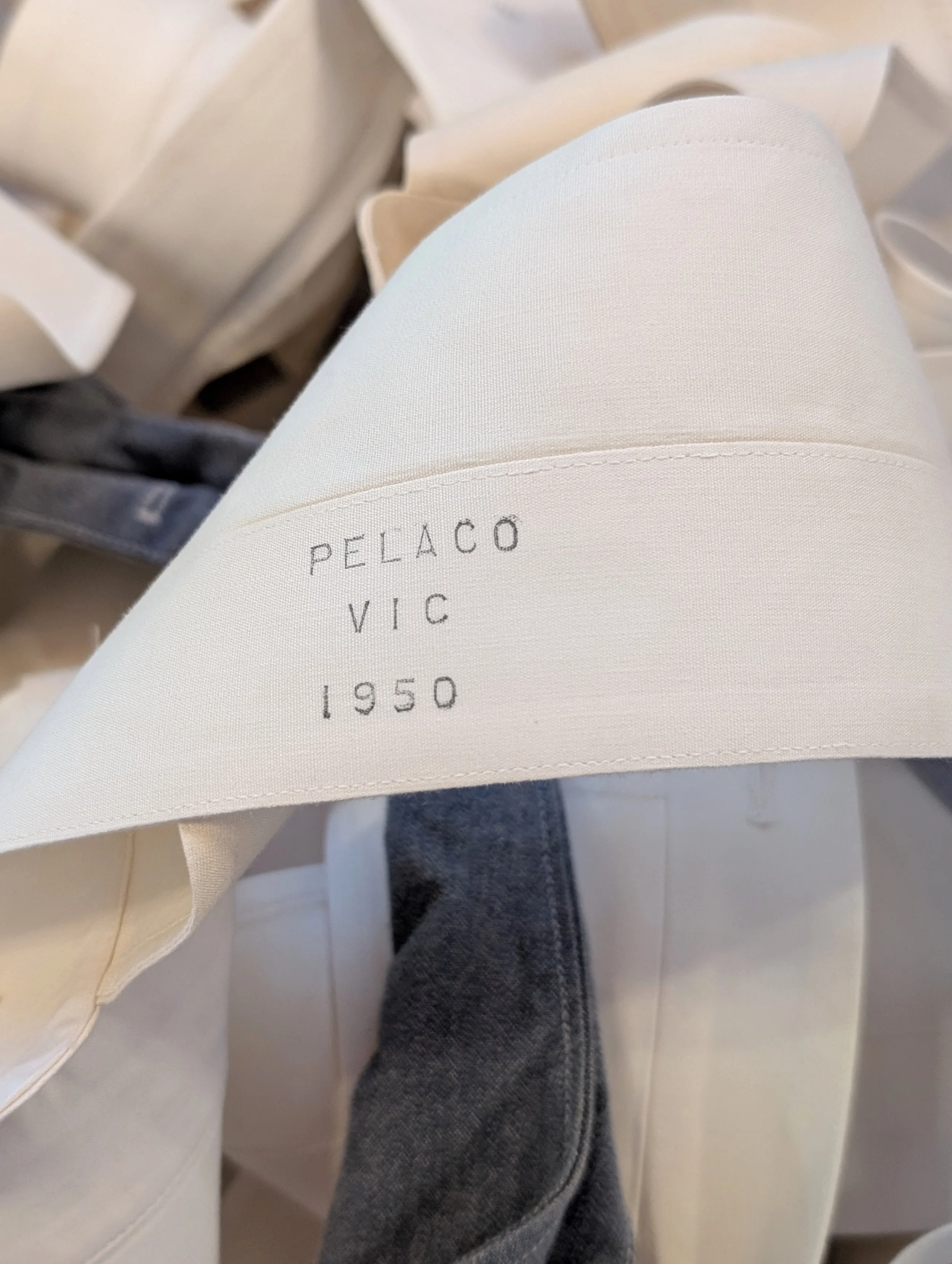
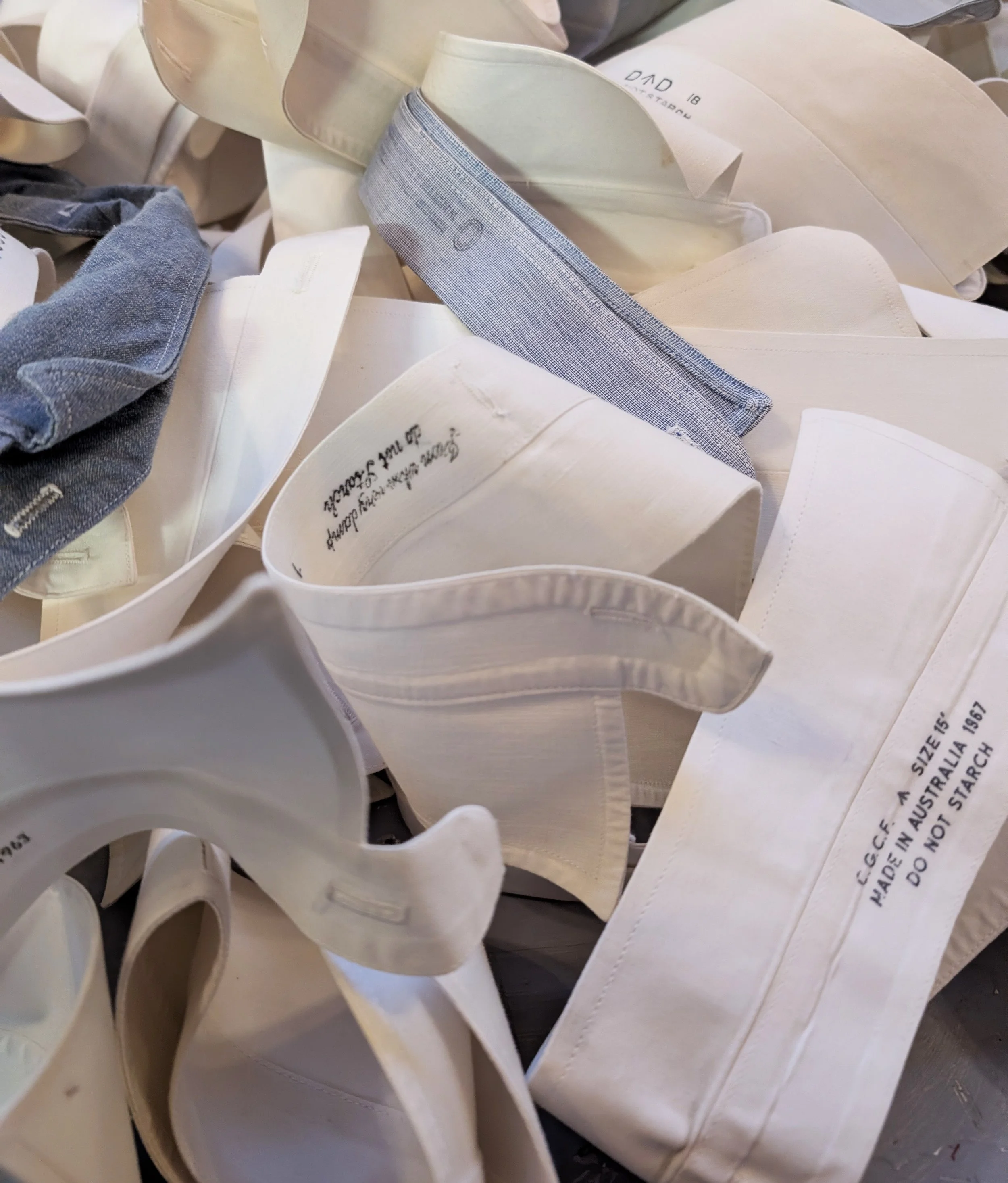
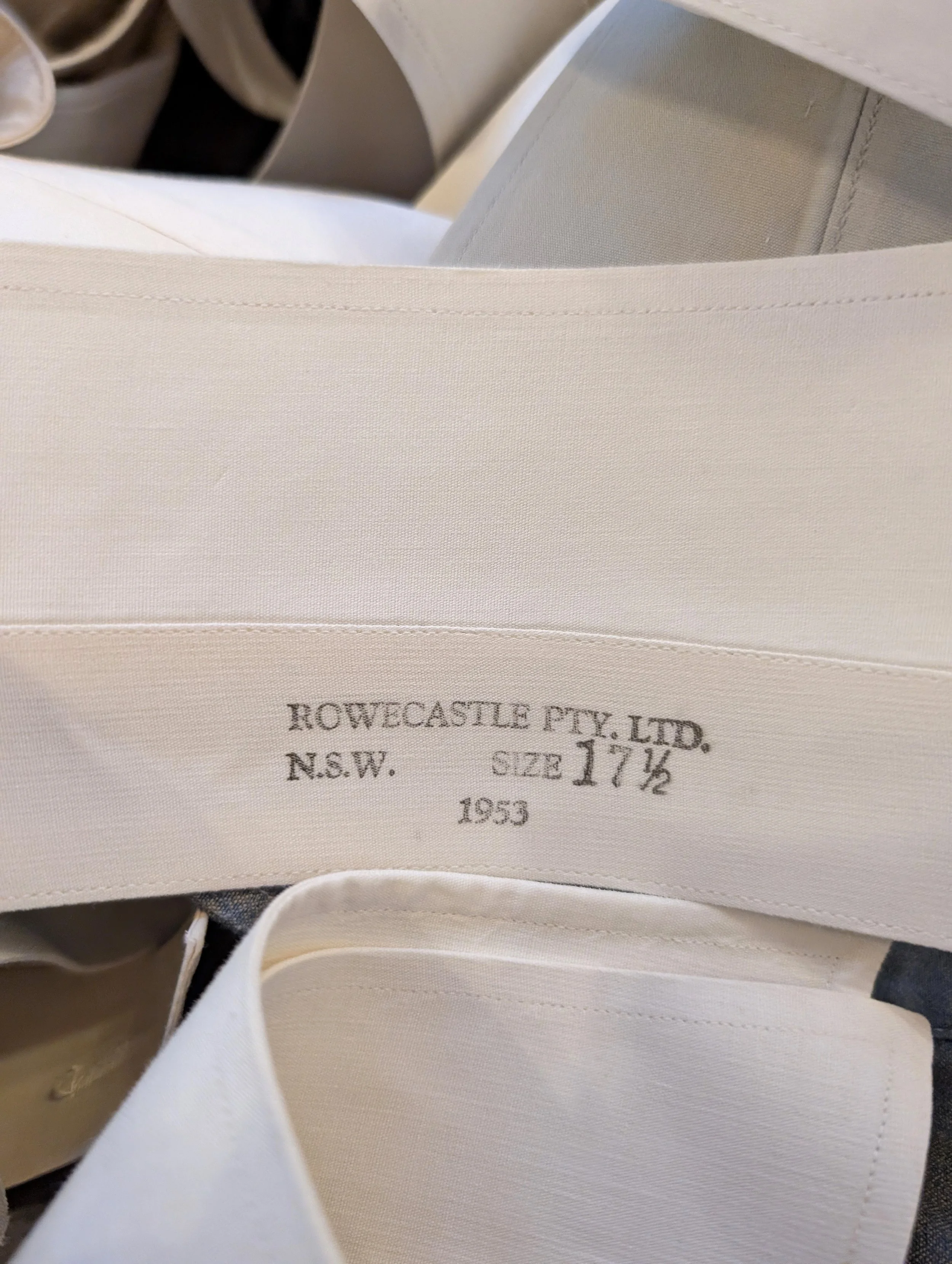
It's these kinds of materials that often find their way into my studio. I rarely begin with a fixed idea of what an artwork will become. Instead, I'm drawn to objects that have lived another life—materials that carry traces of time, labour and human presence.
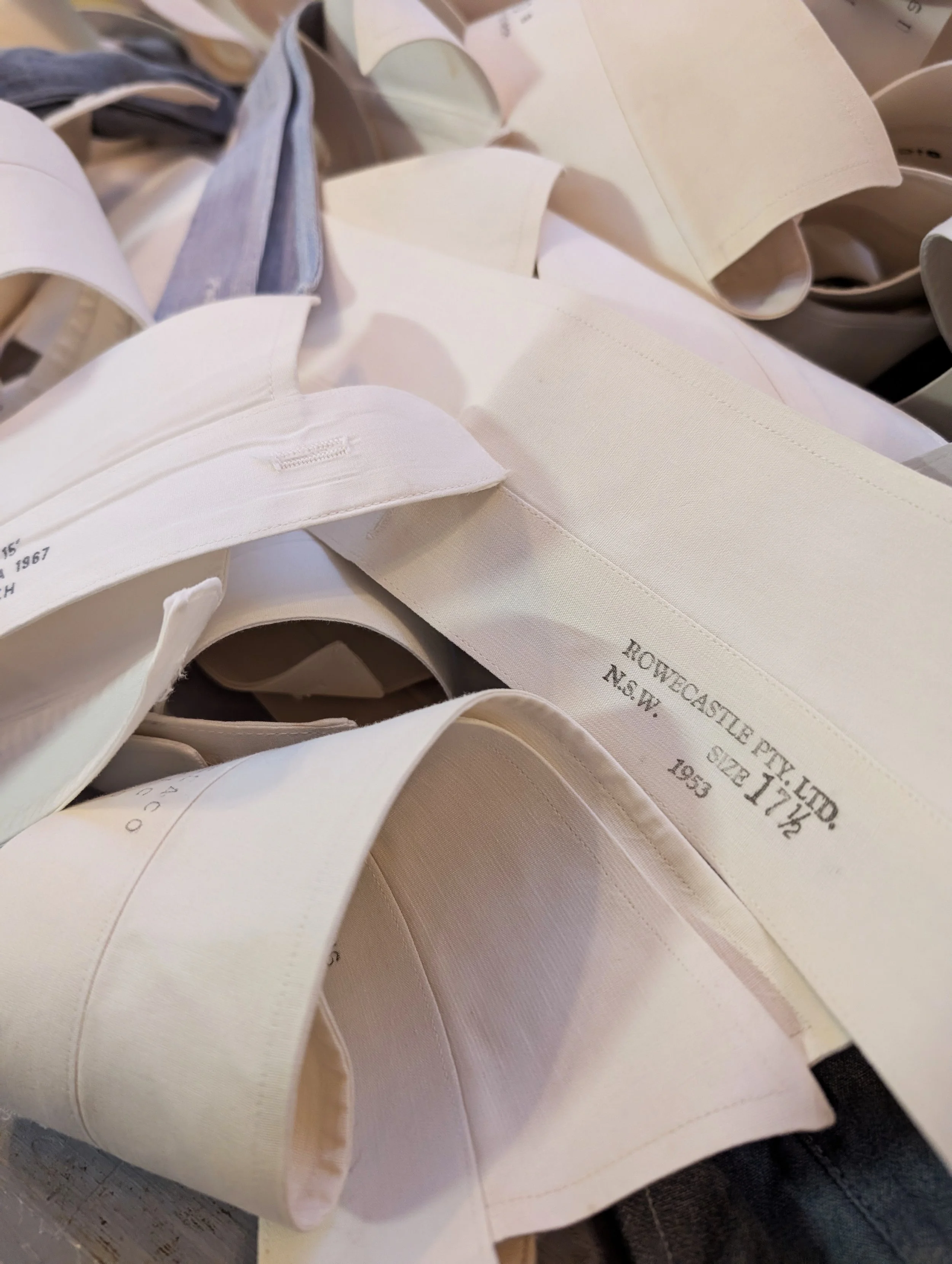
Spending time with these collars, I'll look closely at the stitching, the worn edges, the stains, the handwritten names and the subtle differences from one to another. They'll sit alongside my other collected military textiles and objects, weathered antique linens and found fragments I've collected over many years. Eventually, they'll find their place within a new body of work.
I don't yet know what these collars will become. For now, they're simply part of the conversation—waiting patiently until the work tells me where they belong.
Note - Inside the bag is a paper label "WWII" but as I've looked through them more closely, it's clear they span a much longer period. Some are dated from the 1950s through to 1968, and several still carry handwritten soldiers' names marked inside.
Their story is still unfolding...